Mostrando las entradas con la etiqueta SKILLS. Mostrar todas las entradas

23 de junio de 2021

APPROACHING ENGLISH GRAMMAR THROUGH SONGS

The idea of writing this book started after observing students (foreign language learners of English) suffering from the lack of actual daily-life situations in the English used in their grammar course.


They usually separate the grammatical rules from the contexts in which they are used, and memorize them as a poem. Some beginner students translate these rules into their native languages and fall at the danger of transfer.

As a result, most of these courses have created a great deal of difficulty to students at all levels of their language proficiency. Another problem I have noticed is related to what might be called real and artificial contexts used in explaining the grammatical rules. As foreign language learners of English, students have always had a tendency towards using the English they perceive when they watch or hear series, movies, and songs in English.
In contrast, when they read the books of grammar full of monotonous formal contexts with names of unknown people and fake stories, they usually have the sense that the English used in these books is different in one way or another.

They, consequently, move away from learning the contexts in which the grammatical rules are used to learning the rules themselves and finally fail to use them appropriately.

If used properly, this book is expected to familiarize the foreign language learners (inside and outside the classroom) with some contexts with unpretentious incidents created by various composers of songs and presented by some popular singers.


APPROACHING ENGLISH GRAMMAR THROUGH SONGS 


Follow us on facebook

500 GRAMMAR BASED CONVERSATION QUESTIONS

 500 GRAMMAR BASED CONVERSATION QUESTIONS WITH EXPLANATIONS OF GRAMMAR POINTS 

Let's face it, grammar can be boring to teach and can definitely be boring to learn.


This book makes grammar lessons more engaging and interesting for intermediate and advanced ESL / EFL students.


For each of the grammar points there are short, simple, and easy to understand explanations. You can give these explanations to your students or use them for yourself as a guide or reminder.

There are at least 17 questions for each of the grammar points. So your students will have plenty to talk about. Plus, they'll be using the grammar you just taught them in a natural and pain-free way. 


500 GRAMMAR BASED CONVERSATION QUESTIONS


Follow us on facebook


21 de junio de 2021

TARGETING GRAMMAR - THE ULTIMATE RESOURCE FOR TEACHING GRAMMAR

 The Targeting Grammar Activity Book Series follows a carefully developed scope and sequence that provides comprehensive instruction in grammar and punctuation, enabling all students to become skilled communicators.


Each book delivers basic instruction on grammar conventions appropriate to the year level. The activities provide a step-by-step process towards achieving knowledge and understanding of the elements of grammar and their practical application.

The books are divided into six sections that cover the following areas of study: Nouns, Pronouns, Adjectives, Verbs, Adverbs and Sentences. Each section includes definitions, explanations, examples and activities for students to practise and consolidate their knowledge and understanding of grammar in reading and writing.


TARGETING GRAMMAR - THE ULTIMATE RESOURCE FOR TEACHING GRAMMAR


Follow us on facebook

26 de abril de 2020

READING & WRITING SKILLS BUILDERS


50 Motivating reproducibles that reach & teach every learner!

Make learning fun and kids will eat it up!

The grammar, usage, mechanics, vocabulary, reading-comprehension, and reading-response activities in this book are so entertaining your students will clamor for seconds.

Use these instant, irresistible activities anytime of the day- from morning jump-stars to end-of-the day treats. Turn to them to teach essential rules of grammar, extend mini-lessons, enhance learning centers, or simply provide practice for kids struggling with a particular skill.


24 de abril de 2020

50 QUICK-PLAY GRAMMAR GAMES

Educational board games are often expensive and sometimes limited in scope.

School materials budgets aren’t getting any more generous and value is an important consideration when making a purchase for the classroom or therapy setting. My goal in writing this book is to provide educators with a wide variety of game types in many different skill areas for a reasonable price. 

These games can be used exactly as they are printed (some photocopying may be required), or you can photocopy the boards, color them, laminate them, and store them in file folders for repeated use. These games make great additions to learning centers or as take-home activities. As with any tool, every professional who picks up this book will use it differently.


50 Quick-Play Grammar Games is designed to reinforce a variety of basic grammar skills. At least two games are included for each skill in the book, and two different skill levels are addressed within each skill area. 


BRAIN-FRIENDLY STRATEGIES FOR THE INCLUSION CLASSROOM


Insights from a neurologist and classroom teacher.

Historically, teachers in regular classrooms have not felt prepared to teach exceptional students, preferring to leave the job to trained specialists.

But times and laws have changed, and most classrooms today have at least some inclusive aspects to them. Brain research has provided educators with a better understanding of instructional practices that not only are essential for students with special needs, but also benefit their peers. These new tools will both help teachers face the challenges of teaching an inclusion class and make teaching more fruitful and rewarding.

The learning brain, it is only relatively recently that cognitive neuroscientists have begun to study how our brain structures support mental functions.


BOREDOM IN THE CLASSROOM ADDRESSING STUDENT MOTIVATION, SELF-REGULATION, AND ENGAGEMENT IN LEARNING.


Boredom in the Classroom is an essential resource for researchers, scientist-practitioners, clinicians, and graduate students in the fields of child and school psychology, educational psychology, social work, and related disciplines.

This brief synthesizes current findings on the many aspects of chronic student boredom, its relationship with negative academic, emotional, and health outcomes, and what professionals can do to best address it. Citing the complexity of this common student emotion, the author spotlights boredom susceptibility during the critical K-12 years. 

The brief analyzes cognitive and emotional attributes of boredom and identifies emotional skills that can be strengthened to counteract it. In addition, the volume features strategies for educators and school counselors to reduce boredom, both internally and in class.

The academic emotion of boredom, interestingly, is one of the most commonly experienced emotions of students in schools (Pekrun, Goetz, Daniels, Stupnisky, & Perry, 2010). It is not an emotion to which teachers have paid much attention. Certainly teachers have had students tell them that they are bored in class but teachers may attribute this emotion to laziness, student anxiety or depression, or to personality variables. School psychologists and other mental health personnel in schools do not have a history of either assessing or providing interventions for boredom in schools.


CLASSROOM MOTIVATION


How to engage your students in learning.

This study guide provides numerous tools for your use to reenergize and enhance your teaching and negate the misconceptions that may surround your students' views of learning.

Series of three activities that will help you reflect on your current practices in relation to the strategies presented in the text.

The activities in the guide will assist as you connect the suggestions and strategies in Classroom Motivation from A to Z to your real-life teaching experiences and make the information presented immediately applicable. Many of the activities provide an opportunity for you to turn the concepts into actual plans for your own classroom.


20 de abril de 2020

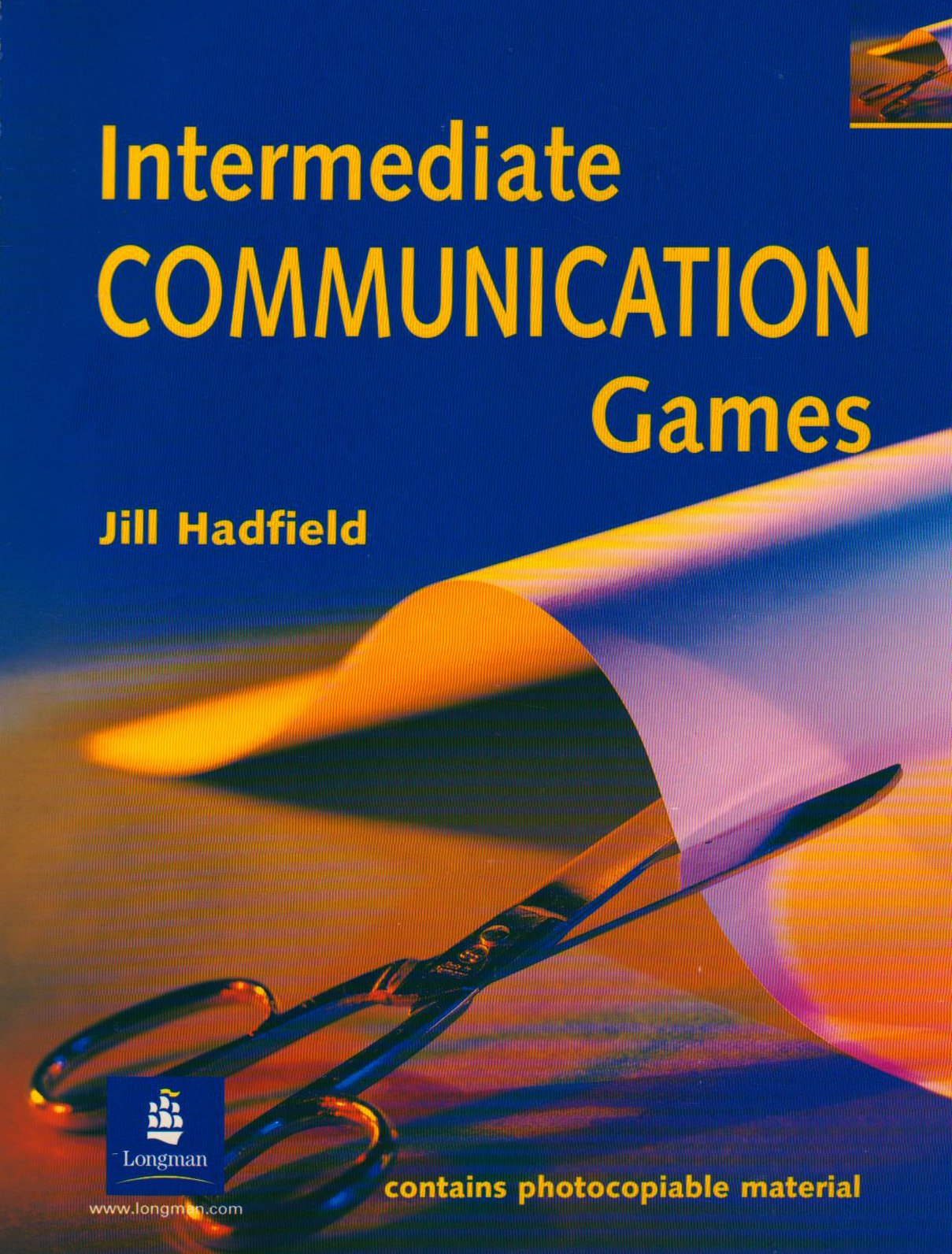
COMMUNICATION GAMES FOR ELEMENTARY, INTERMEDIATE AND ADVANCED


A collection of games and activities for elementary students of English.

The games in this book have been specially written for beginners and elementary students – the tasks have been designed in such a way that only a very limited knowledge of a language is necessary to complete them.

Each game is written within a specific functional area and limited to one or two structures and a clearly defined lexical field. They can be used with beginner’s right from the very first lesson.

The games are arranged in approximate order of difficulty, following a traditional structural progression, although teachers may, of course, use the games in any order, following their own syllabuses.


17 de abril de 2020

BEGINNER’S COMMUNICATION GAMES


About games.

A game is an activity with rules, a goal and an element of fun.

There are two kinds of games: competitive games, in which players or teams race to be the first to reach the goal, and cooperative games, in which players or teams work together towards a common goal. Both kinds are featured in this book.

The activities in this book fall into two types: linguistic games and communicative games. In linguistic games, the goal of the games is linguistic accuracy, i.e. producing a correct structure.

Communicative games, however, are activities with goal or aim that is not linguistic. Successful completion of the game will involve the carrying out of a task such as drawing in a route on a map, filling in a chart, or finding two matching pictures, rather than the correct production of a structure.

However, in order to carry out this task it will be necessary to use language, and by careful construction of the task it will be possible to specify in advance what language will be required.


15 de abril de 2020

KINDERGARTEN BASIC SKILLS: COLORS, NUMBERS, COUNTING


Counting is the process of determining the number of elements of a finite set of objects.

The benefits of coloring pages: 1) Self-expression - coloring on a blank "canvas" (piece of paper), is a way for children and adults alike to express themselves.

You can tell a lot about the way a person is feeling by the images that they draw, the colors that they use. 


USBORNE BETTER ENGLISH – IMPROVE YOUR SPELLING WITH LOT OF TEST AND PUZZLES


Spelling is an important skill for many reasons. Above all, it is vital to be able to spell correctly so that you do not confuse your reader.

For instance, there are certain words (called homophones) which sound the same, but which have different spellings and meanings.

As your spelling gets better, your writing style will also improve, because you will be able to write with confidence, using a wide range of words to express yourself.


FUN CLASS ACTIVITIES – BOOK 1


Games and activities for teachers.

Fun class activities 1 is an indispensable resource book for teacher who wish to inject some fun and laughter into their lessons.

It contains 65 photocopiable activities, using humor to teach language more effectively. The activities include jigsaw-reading, tongue-twisters, correcting misprints, acting out sketches and role-plays, re-telling jokes and anecdotes, and playing charades and consequences. 

As so much humor is based in language, these activities are ideal for practicing, for example, reading and speaking skills, correct pronunciation, grammar and vocabulary.


ENGLISH WITH GAMES AND ACTIVITIES – ELEMENTARY LEVEL


English with games and activities is designed for elementary students of varying ages, studying English as a foreign language.

Contains games and activities which help students to gradually acquire basic vocabulary and grammar.

These words are then used on the following pages in various games and activities such as crosswords, words searches, anagrams etc.


ENGLISH COMPREHENSION FOR PRIMARY


Reading will help you to improve your understanding of the language and build your vocabulary.  

There are different types of texts and interactive exercises that practice the reading skills you need to do well in your studies, to get ahead at work and to communicate in English in your free time.


ENGLISH WITH CROSSWORDS BOOKS 1 – 3 FOR BEGINNERS, INTERMEDIATE AND ADVANCED


Language teachers all over the world agree that visual material can significantly aid the comprehension of the new vocabulary.

Pictures provide context and unambiguous meaning, thereby allowing students to learn and remember words more easily.

English with crosswords develop this concept to the full introducing all new words within a chosen theme, each one alongside its visual representation.


DISNEY – PHONICS AND READING


Adventures in learning offers a unique, educational approach to teaching essential skills to your child.

The full-color workbooks use a delightful Disney character on every page to motivate young children and create exciting lessons.

This work books is 32 pages including answer sheets.
It covers consonants, long and vowel sounds and review exercises.


14 de abril de 2020

CREATIVITY IN THE ENGLISH LANGUAGE CLASSROOM

Developing creativity is not an easy option and poses future challenges.

It has been compared to a muscle that needs the constant constraining discipline of exercise to strengthen individuals’ innovative thinking and problem-solving.

There is a tendency to devote time to its development with children and young learners, when it is as important to extend its use to give positive satisfaction to all ages.

This volume mixes contributions from a wide range of authors, from those with many years’ experience and previous publications to those who have just started their journey.

It demonstrates that creativity in the language classroom isn’t limited to the ‘gifted’ and ‘talented’ but is something that any teacher can try to apply.

Creativity is an endangered species in the current model of education, which is increasingly subject to institutional, curricular and assessment constraints.


This collection will serve to encourage and inspire teachers to allow their creativity to flourish, and to foster it in others. 


CLASSROOM STRATEGIES FOR INTERACTIVE LEARNING

Develop your students into purposeful thinkers and proficient readers by using classroom strategies that scaffold comprehension.

Influential collection of literacy skill-building strategies to bring this edition in line with recent scholarship in the literacy field and today s understandings about reading comprehension.

The stronger focus on gradual release of responsibility, metacognition, and what happens before, during, and after reading will allow your students to really own these strategies.


The Strategy Indexes that accompany each strategy will assist you in your instructional planning and have been updated to include the strengths of each strategy in terms of instructional focus and comprehension processes.


BILINGUAL AND ESL CLASSROOMS – TEACHING IN MULTICULTURAL CONTEXTS

Theories of bilingualism, second-language acquisition, cultural transmission, content integration, assessment of language minority students, bilingual special education, policy and practice, and community relations.

To examine and to bring to life the necessary interplay between theory and classroom application, we include engaging vignettes of students and teachers, and instructional guidelines features, and thought-provoking questions at the end of each chapter.


Language and culture are integral components of the instructional process in all classes for all students, and that instruction should be provided in a warm, supportive sociocultural environment that stimulates students’ continuous linguistic, cognitive, and academic development.